Introduction
Vape ingredient labeling is an important part of product compliance in the United States. Manufacturers, distributors, and retailers need to understand what information must appear on vape packaging, which warnings apply, and how federal and state requirements affect the products they sell. However, the rules are not always straightforward. Requirements can differ depending on the product type, its ingredients, the packaging, and the laws in the state where it is sold.
For businesses in the vaping industry, accurate vape ingredient labeling helps support regulatory compliance, product transparency, and informed consumer decisions. A label that looks complete may still miss a required warning or contain a misleading statement. Likewise, listing every ingredient does not automatically mean a product meets all applicable FDA requirements.
This guide explains the key principles of vape ingredient labeling, including federal labeling rules, nicotine disclosures, health warnings, ingredient transparency, and state-level considerations. It also explains how businesses can review their packaging and reduce the risk of avoidable compliance problems.
Understanding Vape Ingredient Labeling Requirements
Vape ingredient labeling refers to the information displayed on an electronic cigarette, e-liquid container, or its packaging. Depending on the applicable rules, that information may include the product identity, manufacturer details, nicotine-related disclosures, health warnings, and other required statements.
In the United States, the Food and Drug Administration (FDA) regulates electronic nicotine delivery systems, commonly known as ENDS, under the federal tobacco product framework. This category includes many e-cigarettes, vape pens, and e-liquids containing nicotine derived from tobacco, including certain products using synthetic nicotine.
Importantly, there is no single universal label checklist that applies identically to every vaping product. Requirements depend on the product’s characteristics, applicable federal regulations, and relevant state or local laws.

Businesses should therefore distinguish between information that is legally required, information that may be required under particular circumstances, and voluntary information intended to improve transparency.
Why Accurate Labeling Matters
Accurate vape ingredient labeling helps consumers identify products and understand important safety information. It also helps businesses demonstrate that they have considered the regulatory requirements relevant to their products.
Incorrect labels can create problems during retail inspections, distribution reviews, or regulatory enforcement. Missing warnings, unsupported health claims, and inaccurate nicotine information can be particularly concerning.
For manufacturers, labeling should be treated as part of product development rather than a final design task. Retailers should also review packaging before purchasing or selling products instead of assuming that every product supplied by a distributor is compliant.
What Information Is Mandatory on Vape Labels?
The information required on a vape product label depends on the product category and the applicable rules. Several areas deserve particular attention when evaluating vape ingredient labeling.
Nicotine Health Warnings
One of the most important federal labeling requirements concerns nicotine addiction warnings. Covered tobacco products, including many e-cigarettes and e-liquids containing nicotine, are subject to specific warning requirements under FDA regulations.
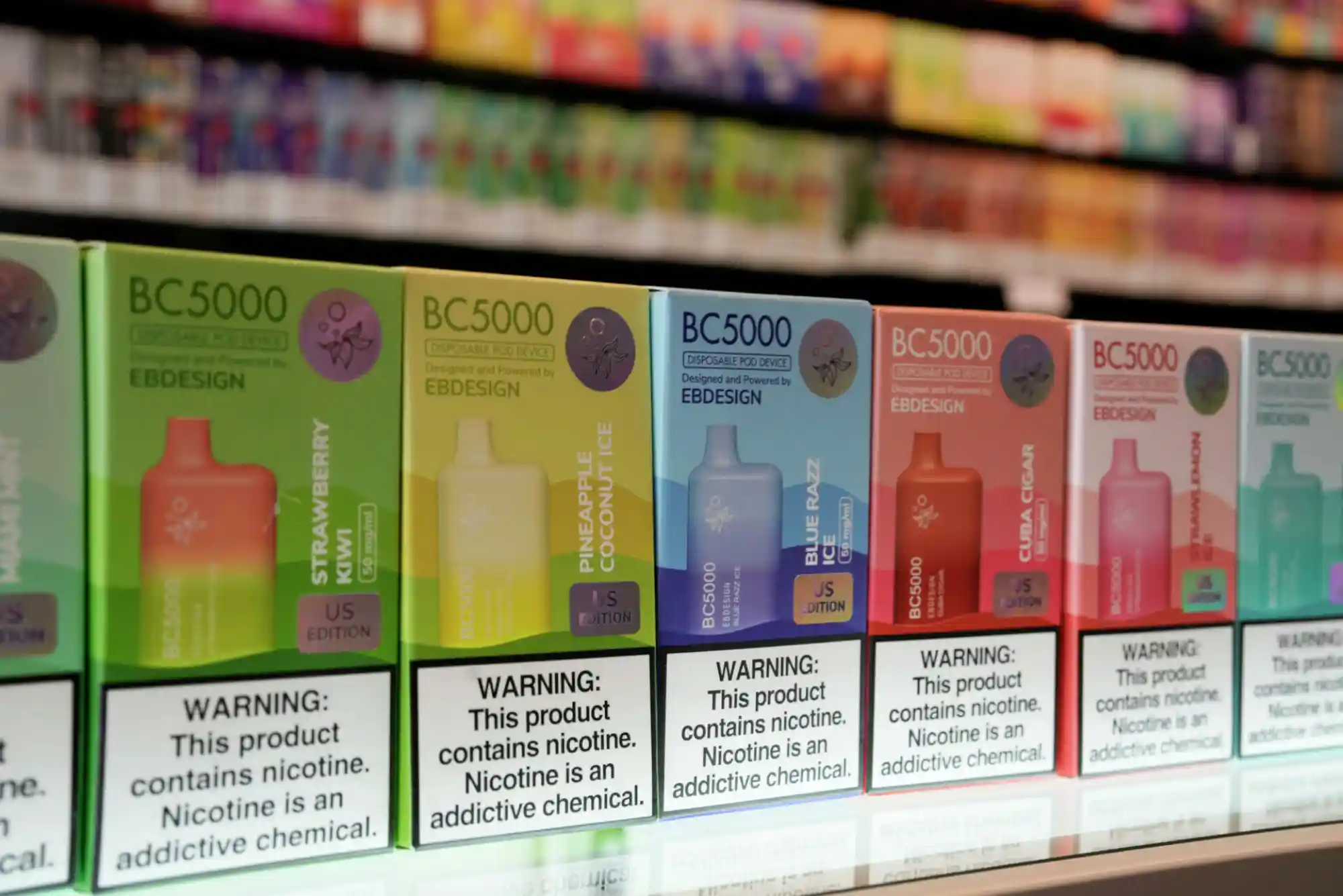
For covered products, the required warning generally states:
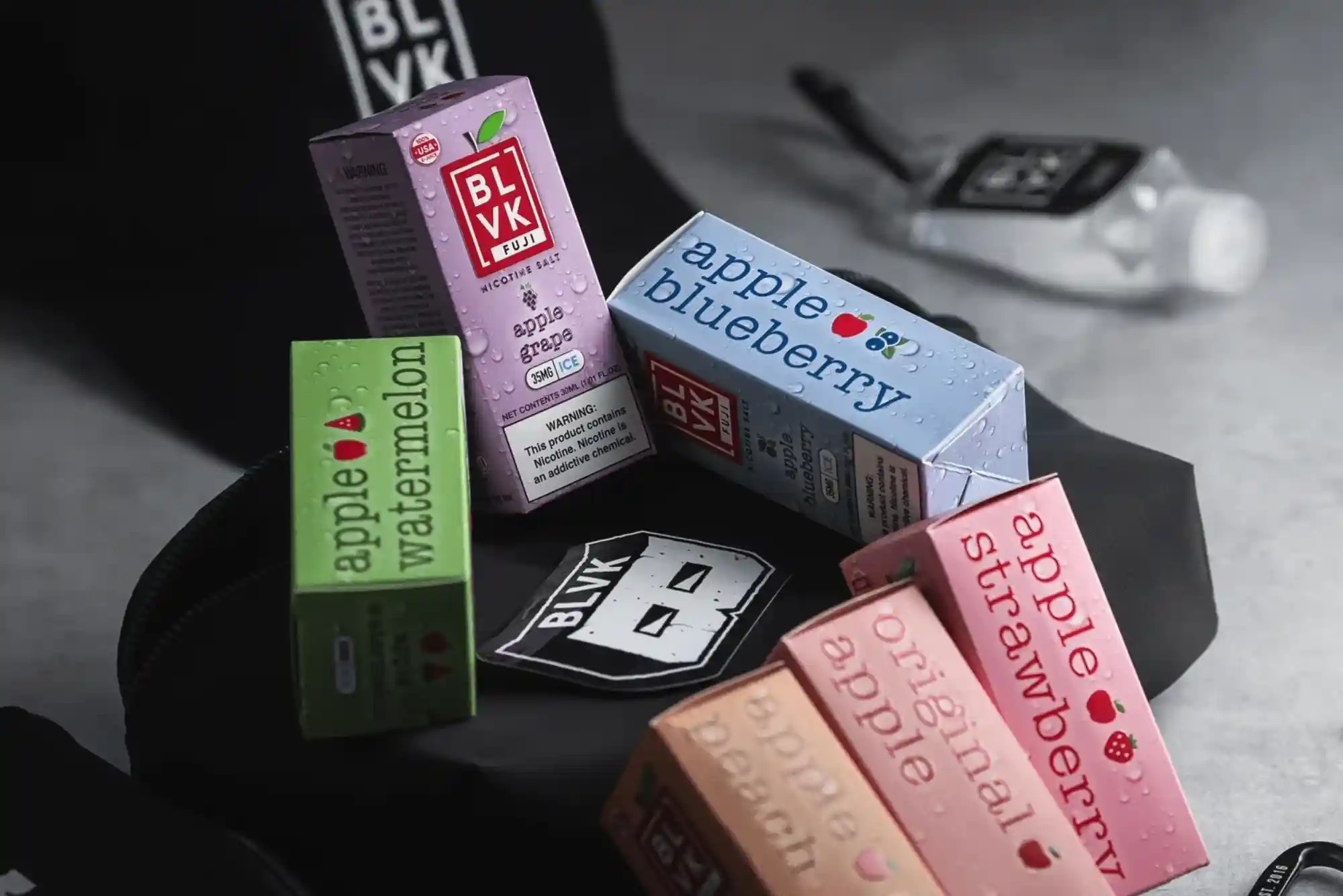
“WARNING: This product contains nicotine. Nicotine is an addictive chemical.”
The warning must follow the applicable requirements for wording, placement, size, and presentation. Businesses should not assume that including the sentence somewhere on the package automatically satisfies the rules.
The FDA has specific requirements governing warning statements for tobacco products, and businesses should consult the official guidance on FDA labeling and warning statement rules before approving packaging.
The applicability of particular warnings can depend on the product and the governing regulation. For example, products without nicotine may require a different compliance assessment from products containing nicotine. Businesses should verify the current rules rather than simply removing a warning based on a supplier’s description.
Product Identity and Manufacturer Information
Product labels and packaging may also need to identify the product and provide relevant business information, depending on the applicable federal and state requirements.
Manufacturers should verify which details are required for their product category, including the product’s identity and any applicable manufacturer, distributor, or contact information. Other requirements may apply under general packaging laws or state-specific regulations.
Clear identification is useful even when a particular detail is not universally mandated on every package. It helps retailers trace products through their supply chains and enables consumers to distinguish between similar products.
Nicotine Strength and Product Volume
Nicotine concentration and e-liquid volume are important product details. Their specific labeling obligations must be checked against the laws applicable to the product and market.
Manufacturers commonly express nicotine concentration in milligrams per milliliter (mg/mL) or as a percentage. These measurements are not interchangeable without considering the units and the way the percentage is defined.
For example, a label stating 20 mg/mL communicates a concentration of 20 milligrams of nicotine per milliliter of liquid. However, businesses should not assume that one format automatically satisfies every applicable labeling requirement.
Where nicotine strength or liquid volume is displayed, the information should be accurate, consistent with product specifications, and presented without misleading consumers. Quality-control procedures should ensure that the packaging, product records, and laboratory results agree.
Ingredient Disclosure
Ingredient disclosure is a central concern in vape ingredient labeling, but an important distinction is necessary: federal law does not establish one simple, comprehensive ingredient-list format that universally applies to every vape product in the same way.
FDA requirements concerning tobacco product ingredient reporting, product submissions, and package labeling are separate regulatory matters. A requirement to submit ingredient information to the FDA does not automatically mean that the same complete list must appear on the consumer-facing label.
Manufacturers should determine which ingredient disclosures are specifically required for their products and whether additional obligations apply under state law.
Voluntary ingredient lists can still help improve transparency. Depending on the formulation, manufacturers may choose to identify propylene glycol, vegetable glycerin, flavoring ingredients, and nicotine. Any voluntary disclosure should be accurate and should not imply that an ingredient is harmless simply because it is familiar or commonly used in other products.
How FDA Rules Affect Vape Ingredient Labeling
The FDA’s regulatory framework covers more than the appearance of a product label. It also addresses the marketing and authorization of tobacco products, ingredient reporting, and restrictions on misleading representations.
Understanding these distinctions is essential for businesses that want to avoid treating a well-designed package as proof of full regulatory compliance.
FDA Marketing Authorization Is Separate From Label Compliance
A vape product’s label may contain the correct warning and still be associated with a product that cannot legally be marketed in the United States.
The FDA generally requires applicable new tobacco products to receive the necessary marketing authorization before they can be legally marketed. Businesses must evaluate authorization status separately from packaging compliance.
This means a manufacturer cannot assume that adding the required nicotine warning, listing ingredients, or printing a batch number resolves every regulatory issue.
Retailers should take reasonable steps to verify the regulatory status of products they purchase, particularly when dealing with unfamiliar brands or suppliers making broad claims about approval.
Avoid Misleading Health and Safety Claims
Labels and advertisements should not mislead consumers about a product’s health effects, nicotine content, or regulatory status.
Statements such as “FDA approved,” “completely safe,” or “risk-free” should never be used without a legally supportable basis. In particular, FDA marketing authorization for a tobacco product should not be presented as proof that the product is safe or approved as a smoking-cessation medicine.
Businesses should review the full presentation of a product, including packaging text, symbols, flavor descriptions, and promotional claims. Even when individual statements appear harmless, their combined presentation may create a misleading impression.
Ingredient Reporting Is Not the Same as a Public Ingredient List
Manufacturers should understand that FDA ingredient-reporting obligations are distinct from consumer-facing packaging requirements.
Applicable federal law can require manufacturers to report ingredients in tobacco products to the FDA. Separate rules may govern the contents of product submissions and other regulatory records.
Companies should maintain accurate formulation records and confirm which submissions, disclosures, and label statements apply to their specific products. When the regulatory position is unclear, qualified tobacco regulatory counsel can help establish the correct requirements.
Do State Laws Require Additional Vape Labeling?
Federal rules are only part of the compliance picture. States and local jurisdictions may impose additional restrictions concerning vape products, including packaging, sales, product composition, or other retail conditions.
For this reason, vape ingredient labeling should be reviewed for each intended sales market rather than approved once and used everywhere without further checks.
State-Specific Packaging Requirements
Some jurisdictions may establish requirements relating to child-resistant packaging, product information, nicotine disclosures, or restrictions on particular products. The exact rules and their applicability can vary.
Businesses should verify whether a requirement applies to the manufacturer, distributor, retailer, or more than one party. They should also check whether the rule covers the product itself, its container, its outer packaging, or its sale.
A practical compliance process should include monitoring legislative changes, reviewing official state guidance, and documenting the requirements used to approve each label.
Retail businesses can also benefit from this guide on Vape Retailers Navigating State Compliance, which provides relevant context for understanding the wider responsibilities associated with selling vape products.
Why Retailers Should Check Labels Before Selling
Retailers may face consequences when they sell products that violate applicable federal or state requirements. Although responsibilities differ by jurisdiction and business role, retailers should not rely exclusively on supplier assurances.
A product review should consider whether the package contains the appropriate warnings, whether the displayed information appears accurate, and whether the product is legally marketable in the intended jurisdiction.
Retailers should also keep supplier documentation and purchase records. If a compliance concern emerges, these records can help identify affected products and support a timely response.
How to Create a Vape Ingredient Label Compliance Process
A consistent review process can make vape ingredient labeling easier to manage, especially for businesses handling several brands, formulations, or sales territories.
Verify the Product Formula
Start by confirming the product’s actual formulation against its approved internal specifications and relevant quality records. Check nicotine concentration, carrier liquids, flavoring components, and any other ingredients used.
If the formula changes, the business should assess whether the change affects labeling, regulatory submissions, authorization status, or state-specific obligations.
Build a Requirement Checklist for Each Market
Next, identify the federal requirements and the additional rules applicable to each state or locality where the product will be sold.
The checklist should distinguish mandatory label statements from optional ingredient disclosures and other packaging details. It should also record the source of each requirement and the date it was last verified.
This approach reduces the risk of applying a rule from one state to another where the legal requirements may differ.
Review Artwork Before Printing
Packaging artwork should receive a compliance review before large print runs begin. Reviewers should check the exact warning language, readability, placement, contrast, and consistency of product information.
They should also verify that no unsupported health claim or misleading regulatory statement appears on the packaging.
A second reviewer can help identify mistakes that may be overlooked during routine design approval. Keeping dated copies of approved artwork creates a useful record when labels are updated.
Maintain Records and Review Changes
Compliance does not end when packaging is printed. Businesses should maintain product specifications, label versions, supplier documentation, and records of their regulatory assessments.
They should also monitor relevant regulatory updates. When requirements change, the business can determine whether existing inventory, future production, or distribution arrangements need attention.
For additional industry information and regulatory updates, businesses can explore vapexplore. Any compliance decision, however, should be checked against current official legal and regulatory sources.
Common Vape Ingredient Labeling Mistakes to Avoid
One common mistake is assuming that every ingredient must appear on every vape label. The correct approach is to identify the specific consumer-facing disclosure obligations and distinguish them from ingredient-reporting requirements.
Another mistake is using an outdated nicotine warning or placing the correct warning in a format that fails to meet applicable presentation rules. Exact wording and formatting matter, so packaging should be reviewed against current official requirements.
Businesses may also rely on supplier claims without checking product authorization or applicable state restrictions. A compliant-looking label is not enough to establish that a product can legally be marketed or sold.
Finally, some companies treat voluntary ingredient disclosure as a guarantee of safety. Ingredient transparency can provide useful information, but it does not establish that a product is harmless. Clear, accurate labeling should be combined with appropriate regulatory review and responsible product communication.
The Future of Vape Ingredient Labeling
Vape ingredient labeling will remain an important issue as regulators respond to changing products, nicotine formulations, and concerns about youth access and consumer protection.
Businesses should expect compliance work to involve more than printing a warning. Accurate product records, market-specific reviews, reliable suppliers, and timely updates are all important parts of a sound process.
Companies that integrate labeling checks into product development and retail purchasing can respond more effectively when requirements change. They can also reduce the risk of expensive packaging revisions and avoidable distribution problems.
At the same time, greater transparency should not be confused with permission to make unsupported claims. The strongest labeling practices combine clear information with a careful understanding of the legal obligations that apply to each product.
Conclusion: Make Vape Ingredient Labeling a Compliance Priority
Vape ingredient labeling requires a careful review of applicable federal rules, nicotine warnings, ingredient-reporting obligations, product information, and state-specific requirements. There is no single checklist that automatically guarantees compliance for every product or market.
Manufacturers should verify their formulations and regulatory obligations before approving packaging. Distributors and retailers should review supplier documentation, product authorization status, and local requirements before placing products on the market.
FAQs
What information must be on a vape label in the USA?
Requirements depend on the product and applicable laws. Covered nicotine-containing tobacco products generally need the prescribed nicotine addiction warning. Other product information and packaging requirements may apply under federal, state, or local rules. Businesses should verify the exact obligations for each product.
Do vape products have to list all ingredients?
Not every vape product is subject to one universal consumer-facing ingredient-list format. FDA ingredient-reporting obligations are distinct from package-labeling requirements. Manufacturers should confirm which disclosures are legally required for their products and whether state law imposes additional obligations.
Does the FDA require a nicotine warning on vape products?
Many covered e-cigarettes and e-liquids containing nicotine are subject to a specific FDA nicotine addiction warning. The applicable wording and presentation requirements should be checked against current FDA regulations and guidance.
Do nicotine-free vapes need ingredient labels?
The answer depends on the product, its claims, and applicable federal, state, and local requirements. A nicotine-free claim does not automatically exempt a product from every labeling or regulatory obligation. Businesses should verify the rules before deciding what information to include.
Can vape companies claim their products are FDA approved?
Companies should not make unsupported claims that a product is FDA approved. Marketing authorization and safety are different concepts, and authorization for a tobacco product does not establish that it is safe. Businesses should describe regulatory status accurately and in accordance with applicable requirements.
Are vape labeling requirements the same in every state?
No. Federal rules provide a baseline, while states and local jurisdictions may impose additional restrictions or requirements. Manufacturers, distributors, and retailers should review the rules applicable to every market where products are manufactured, distributed, or sold.
How often should vape labels be reviewed for compliance?
Labels should be reviewed before a product launches, whenever its formulation or packaging changes, and when relevant regulatory requirements are updated. Periodic reviews can also help businesses identify outdated warnings, inaccurate information, and changes in state requirements.